
How to Deal with Muddy Dog Coats During Wet Weather
Wet-weather walks are part of life for dogs in West Sussex, but mud does not need to mean a stressful bath every time. Learn how to remove muddy paws and coats safely, dry your dog properly, prevent tangles and recognise when skin or paw problems need veterinary advice.
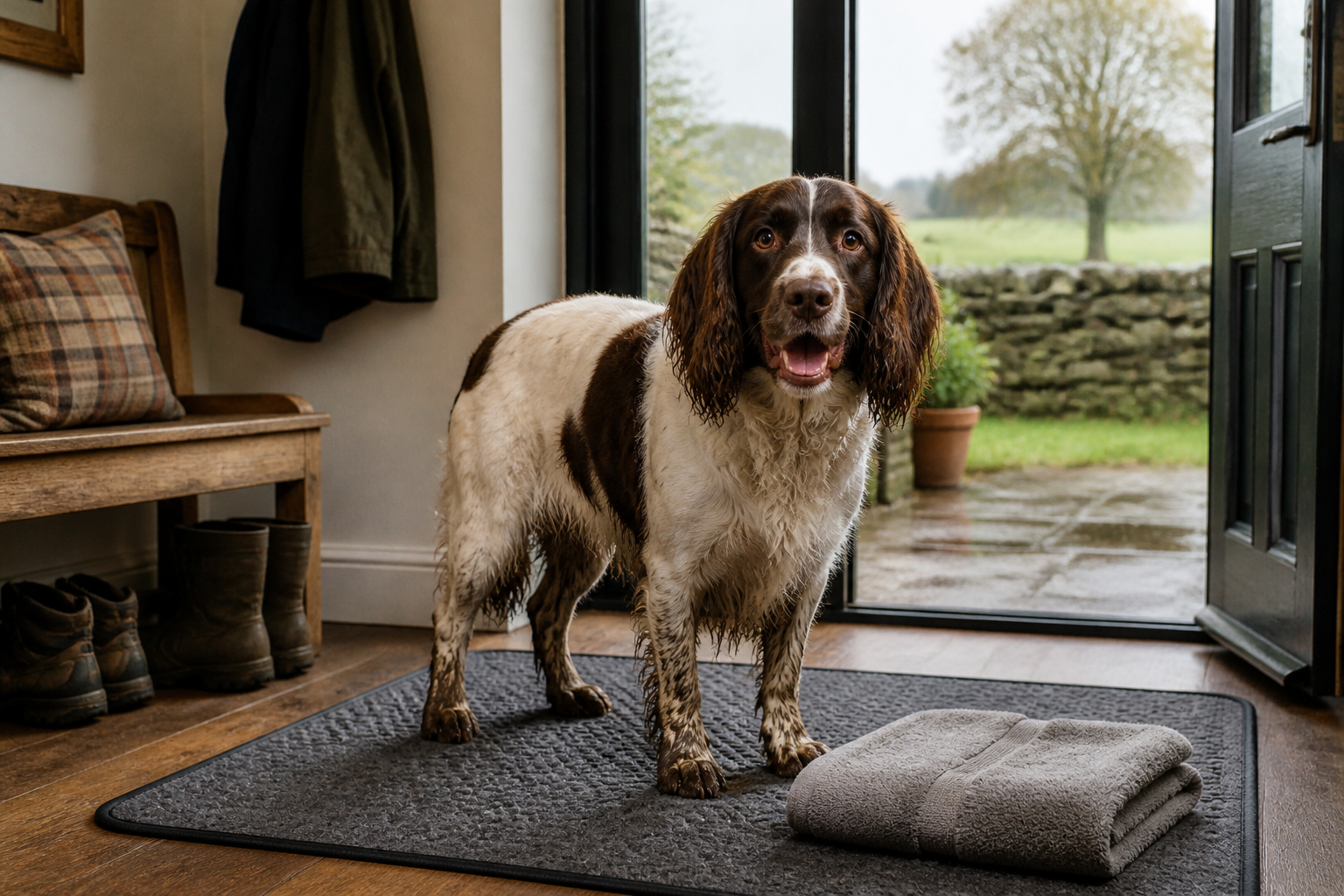
Rainy walks, muddy fields and soggy paws are all part of being a dog owner in Britain. A little mud is usually nothing to worry about, but leaving a coat damp and dirty for too long can make it uncomfortable, encourage tangles and leave grit or debris against the skin.
The good news is that most muddy coats can be managed with a calm routine rather than a full shampoo every time. The right approach depends on your dog’s coat type, how dirty they are and how comfortable they feel with handling. This guide explains what to do after a wet walk, how to dry different coats, when rinsing is enough and when a vet should be involved.
At Howling Dogs Grooming, we take a patient, one-to-one approach because every dog reacts differently to wet handling, brushing and drying. These tips are suitable for ordinary home care, but they do not replace advice from your vet.
Why muddy, wet coats need prompt attention
Mud itself is not usually harmful, but a wet coat can become heavier, cling to the hair and form knots as it dries. This is particularly common in curly, wavy, silky and feathered coats, including the hair around the ears, armpits, legs, tummy and tail.
Damp fur can also trap grit, leaves, grass seeds and other outdoor debris. If these are rubbed into the skin, your dog may become itchy or uncomfortable. Wet paws may collect small stones or mud between the pads, while long hair around the feet can hold onto dirt and moisture.
Thorough drying is also important in colder weather. Small dogs, puppies, older dogs, dogs with thin coats and dogs who are already unwell may become chilled more easily after getting soaked. Your dog should have a warm, dry place to rest after a wet walk.
Your muddy-walk kit
Keeping a few dedicated items by the back door makes the clean-up much easier. You do not need an elaborate set-up; a simple, consistent routine is often the most useful.
- Two or three absorbent towels: one for the body, one for paws and one spare for particularly wet days.
- A non-slip mat: this helps your dog feel secure while you wipe and dry them.
- A dog-safe brush and comb: choose tools suited to your dog’s coat. If you are unsure, ask a professional groomer to demonstrate how to use them.
- A bowl of lukewarm water: useful for muddy paws when a full bath is unnecessary.
- A washable blanket or drying coat: helpful for dogs who dislike vigorous towel rubbing.
- A dog-specific shampoo: keep this for occasions when rinsing is not enough. Human shampoo may irritate a dog’s skin.
- A paw-cleaning cloth: a soft microfibre cloth can be useful, provided it is washed regularly.
- Treats: use small rewards to make the routine calmer and more positive.
What to do as soon as you return home
1. Let your dog settle briefly
Excitement after a walk can make handling more difficult. Give your dog a moment to come inside, shake off and settle on a washable mat. Keep towels close by so they do not have time to rub themselves over furniture or carpets.
If your dog is nervous about being touched when wet, avoid grabbing or restraining them suddenly. Speak calmly, allow them to sniff the towel and reward relaxed behaviour.
2. Remove surface water gently
Press a towel against the coat rather than scrubbing hard. Patting and squeezing absorb water more effectively and is less likely to create tangles. Work from the back and sides towards the legs, belly and feet.
Pay attention to the areas where water tends to sit, such as under the chest, between the front legs, around the collar, behind the ears and beneath the tail. Do not forget the tummy, especially on a small dog who has walked through long wet grass.
3. Check the paws
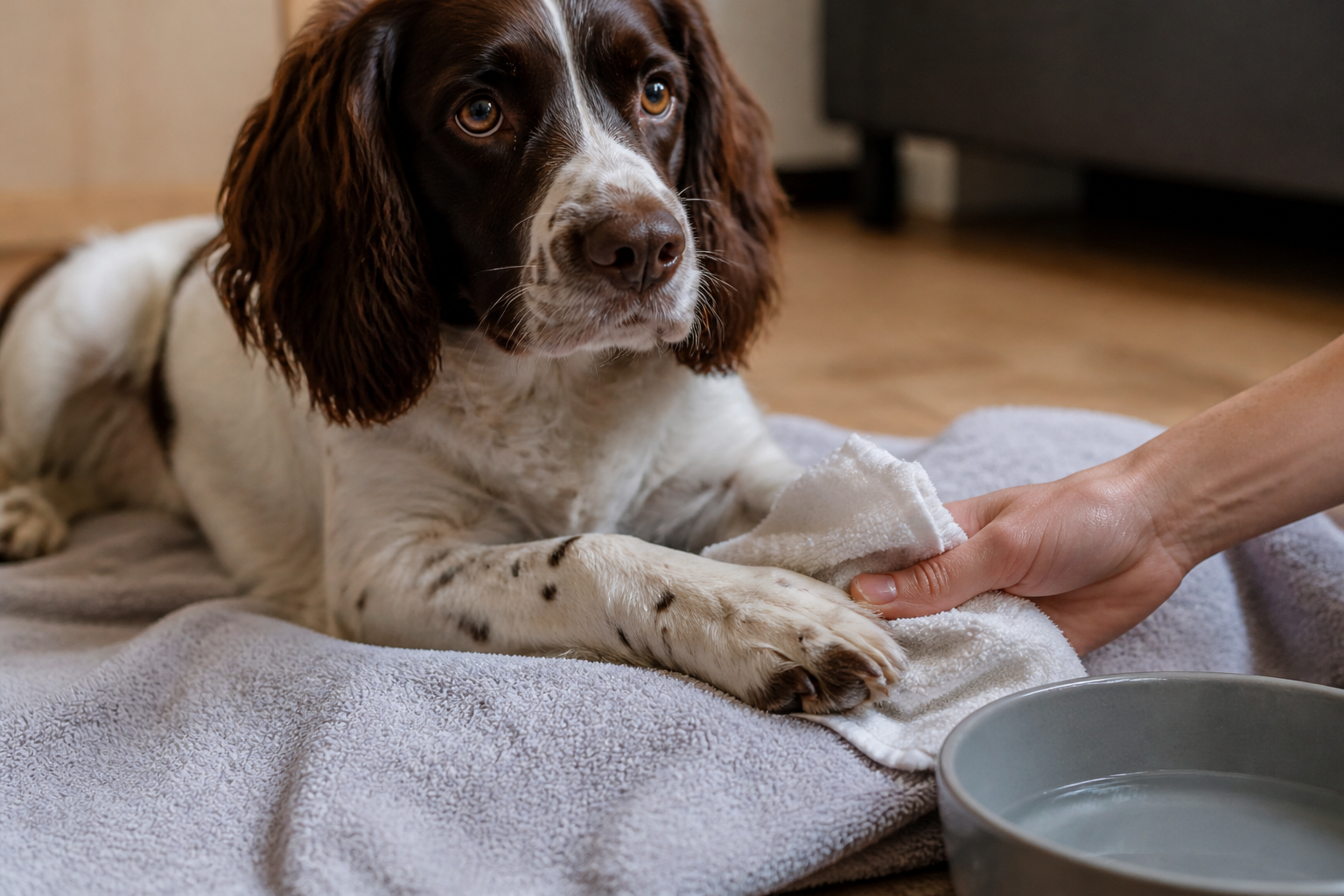
Lift each paw gently and look between the pads and toes. Remove visible mud with your fingers or a soft damp cloth. If mud has dried into a hard lump, soften it with lukewarm water rather than pulling it away.
Check for stones, thorns, grass seeds, cuts, swelling, redness or a broken nail. Do not dig at anything embedded in the skin. If your dog is limping, repeatedly licking a paw or seems painful, contact your vet for advice.
4. Check the coat before brushing
Run your hands gently over the coat to identify clumps of mud, knots or anything caught in the hair. Brush only when you can do so without pulling the skin. A wet tangle can tighten as it dries, so it is better to deal with small knots early than leave them until the next day.
Do not use scissors to cut out a tight mat close to the skin unless you are experienced and can clearly see where the skin ends. Dog skin can be pulled up into a mat, making accidental cuts more likely. A professional groomer or vet can advise on severe matting.
When rinsing is enough
For light mud on the paws, legs or lower belly, a lukewarm rinse may be all your dog needs. PDSA advises that dogs generally do not need frequent bathing, and a rinse can be a sensible option after a muddy walk when the coat is otherwise healthy.
You can use a handheld shower, a jug or a shallow bowl of clean water. Keep the water comfortably lukewarm and direct it away from the eyes, nose and ear openings. Rinse until the water runs clear, then towel-dry thoroughly.
A rinse is often preferable to repeated shampooing because frequent use of shampoo may dry or irritate some dogs’ skin. If your dog has allergies, a skin condition or a history of ear problems, ask your vet which bathing routine and products are appropriate.
When your dog may need a proper bath
A full bath may be appropriate when mud has covered most of the coat, your dog has rolled in something unpleasant or the coat still feels dirty after rinsing. Use a shampoo made for dogs and follow the product instructions carefully.
- Brush first if possible. Remove loose dirt and gently deal with manageable tangles before wetting the coat. Wet mats can become more difficult to remove.
- Prepare everything beforehand. Have towels, shampoo, a non-slip mat and treats ready before bringing your dog into the bathroom.
- Use lukewarm water. Test the temperature yourself. Avoid very hot or very cold water.
- Wet the body gradually. Start at the shoulders or back and allow your dog to adjust. Take care around the face and ears.
- Use dog-specific shampoo sparingly. Work it gently through the coat and avoid the eyes, mouth and ear openings.
- Rinse extremely thoroughly. Shampoo left against the skin may cause irritation. Take extra care with dense or double coats.
- Dry calmly and completely. Press with towels first, then allow your dog to rest somewhere warm while the coat finishes drying.
Do not use medicated, flea or antibacterial shampoos unless your vet has recommended the product and explained how to use it. Parasite treatments should be licensed products used exactly as directed. A general bath is not a substitute for a proper flea, tick or worming plan.
How to dry your dog safely
Towel drying
Most dogs are happiest with soft towel drying. Use gentle pressure rather than vigorous rubbing, particularly on a long or curly coat. Replace a saturated towel with a dry one and keep going until the coat is damp rather than dripping.
If your dog dislikes being rubbed, try wrapping them loosely in a towel for a short period. Reward them for standing or sitting calmly, then uncover one area at a time. Never cover the face or leave a wrapped dog unattended.
Using a hairdryer
Some dogs tolerate a hairdryer, while others find the sound and sensation frightening. If you use one, introduce it gradually and keep it on a cool or warm, not hot, setting. Keep the dryer moving and hold it well away from the skin. Avoid directing air into the eyes, ears or nose.
Stop if your dog shows clear signs of distress, such as trying to escape, trembling, freezing, panting heavily or repeatedly licking their lips. A calm, partly damp dog in a warm room is preferable to a frightened dog being forced through drying.
Never use a hot setting close to the skin. Dogs may not move away quickly enough if the air becomes uncomfortable, and heat can irritate or burn the skin.
Drying curly and long coats
Curly and long coats need particular care because damp hair can shrink into tangles. Once the coat is towel-damp, gently separate it into small sections and brush in the direction of hair growth, stopping whenever you meet resistance.
Do not repeatedly drag a brush through a knot. Instead, use your fingers to separate loose hair at the edges if the tangle is small and your dog remains comfortable. For compact mats, ask a professional groomer for help. Trying to remove them by force can be painful and may damage the skin.
Extra care for paws and feathering
Hair around the feet, lower legs and tummy can act like a mop in wet weather. Keeping this hair neatly maintained may make muddy walks easier to manage, but trimming should suit the individual dog and coat. It is best carried out by someone confident with grooming tools and canine handling.
After each wet walk, check between the toes and around the pads. Mud that remains packed into the foot can make walking uncomfortable. Gently clean the area and dry it, paying attention to the skin between the toes.
Do not apply human creams, essential oils or household products to sore paws. If you are considering a paw balm, ask your vet what is suitable, particularly if your dog licks their feet.
Preventing mud before it becomes a bigger job
Keep a towel in the car
A towel at the front door is useful, but a second supply in the car can save the journey home. A quick wipe before your dog gets into the boot or back seat can reduce the amount of mud worked into their coat.
Choose a practical walking route
During very wet spells, paths with less churned-up ground may help. Avoid areas where the mud is deep enough to hide sharp objects or where your dog struggles to walk safely. Wet ground can also be slippery, so watch your dog’s footing.
Consider a well-fitting coat when appropriate
A waterproof dog coat can reduce the amount of rain and mud reaching the body, particularly for dogs with short or fine coats. It should fit comfortably, allow normal movement and not rub beneath the legs or around the neck. A coat does not remove the need to check and dry your dog afterwards.
Keep bedding clean and dry
Washable throws, towels and bedding are helpful during muddy weather. Make sure your dog has a dry place to rest, and do not put them to bed with a wet coat. Damp bedding can remain uncomfortable even after the dog has dried.
Common muddy-coat mistakes
- Bathing after every muddy walk: a thorough rinse may be enough for ordinary mud. Over-washing can irritate some dogs’ skin.
- Leaving the coat to dry without checking it: mud and damp hair can tighten into knots, especially around ears, legs and the tummy.
- Scrubbing hard with a towel: vigorous rubbing can tangle long hair and make handling unpleasant.
- Using human shampoo: dogs need products formulated for their skin and coat.
- Brushing aggressively through mats: this can pull the skin and cause pain.
- Using hot air: high heat can irritate or burn the skin.
- Ignoring the paws: stones, grass seeds, grit and mud can hide between the toes.
- Trying to treat a skin problem with repeated baths: persistent itching or redness needs veterinary advice rather than more shampoo.
When muddy-coat problems need a vet
Contact your vet if your dog has ongoing itching, red or inflamed skin, a strong unpleasant smell, weeping areas, sores, bald patches, repeated ear scratching or frequent paw licking. These signs can have several causes, and a vet is the right person to investigate them.
Seek veterinary advice promptly if your dog is limping, cannot bear weight, has a swollen paw, has a deep cut, appears very painful or has something embedded in the foot. Do not attempt to remove a deeply lodged object at home.
After very cold, wet conditions, watch for signs that your dog is becoming dangerously cold, including persistent shivering, unusual drowsiness, confusion, weakness, loss of coordination, pale gums or collapse. Move them to a warm, dry place and contact a vet immediately. Warm them gradually and do not place anything hot directly against the skin.
If your dog has walked through areas treated with road salt, grit, antifreeze or other chemicals, wipe the paws and tummy promptly and prevent licking. If you think your dog may have swallowed a poisonous substance, contact your vet urgently rather than waiting for symptoms.
Frequently asked questions
Should I let mud dry before brushing it out?
For a small amount of surface mud, allowing it to dry naturally may make it easier to brush away. However, do not leave a wet, tangled coat unattended for hours, and do not wait if the mud is packed tightly around the paws or mixed with knots. Remove what you can gently and rinse areas that are uncomfortable.
Can I use baby wipes on muddy paws?
It is better to use plain water and a soft cloth unless your vet has recommended a particular pet-safe wipe. Dogs lick their paws, so avoid products containing perfumes, disinfectants or ingredients that are not intended for animals.
How often should I bathe my dog in wet weather?
There is no single schedule for every dog. Coat type, lifestyle, skin health and the amount of mud all matter. Many muddy walks only require a paw wash or rinse, while a full bath should be used when the coat genuinely needs cleaning. Ask your vet or a reputable professional groomer for advice tailored to your dog.
My dog hates being dried. What can I do?
Break the process into small stages. Reward your dog for standing near the towel, touching it with their nose and allowing one paw to be dried. Use a quiet voice, avoid chasing them and stop before they become overwhelmed. A one-to-one grooming appointment can also help you learn calmer handling techniques.
Can a groomer help with a coat that is always muddy?
Yes. A groomer can discuss a practical coat length, tidy areas that collect mud and show you suitable brushing and drying techniques. At Howling Dogs Grooming, grooming is carried out calmly and patiently in a purpose-built mobile van, with the aim of making the experience as comfortable as possible for each dog. Grooming advice is not a replacement for veterinary care, particularly when the skin, ears or paws appear sore.
A simple wet-weather routine
- Keep a towel by the door and another in the car.
- Let your dog settle, then pat away surface water.
- Wipe and inspect every paw, including between the toes.
- Check the tummy, ears, legs, tail and collar area for mud or debris.
- Rinse muddy areas with lukewarm water when necessary.
- Use dog-specific shampoo only when a proper bath is needed.
- Dry the coat fully and brush gently once it is towel-damp.
- Wash wet bedding and leave your dog somewhere warm and comfortable.
- Contact your vet if you notice pain, persistent itching, damaged skin or other worrying changes.
With a little preparation, muddy walks can stay enjoyable rather than becoming a daily battle. Gentle wiping, sensible rinsing, careful drying and regular coat maintenance will help keep your dog comfortable through West Sussex’s wet weather. If you would like advice about maintaining a mud-prone coat or arranging a calm one-to-one grooming session, you are welcome to contact Howling Dogs Grooming.